
💼 Consultancy

This November marks the launch of The Leadership Artist—an executive leadership consultancy born at the intersection of science, strategy, and the arts.

But this isn’t just strategic consulting. It’s a living lab. A testbed. A bridge between academic research and business practice.

Why now?

Because I’ve begun a four-year Executive PhD journey at Antwerp Management School, where I’m researching how the cognitive skills developed in musical training—like anticipation, precision, and improvisation—can enhance strategic thinking for executives in today’s complex, digital environments.

And I didn’t want to wait four years to make an impact.

So, The Leadership Artist was created as a real-time application space for emerging insights. Every executive coaching engagement becomes a research collaboration. Every strategy session, a learning opportunity. It’s where theory and practice meet—and inform each other.

Here’s what sets this evidence-based leadership approach apart:

  • Dual Expertise – 20+ years in executive leadership at global firms like Nokia, XING, and DERTOUR, plus a background in classical guitar and choir conducting.
  • Evidence-Based Methods – Research-backed leadership development approaches replace buzzwords and gut feeling.
  • Collaborative Engagements – In the first phase, I’m offering pro bono projects with select partners who want to co-create leadership development programs based on creative leadership strategies.

From strategic leadership offsites to executive coaching, this consultancy is built around one powerful idea:

The mental frameworks that create artistic excellence can be systematically applied to leadership in complexity.

The timing is deliberate. Executive leadership has never been more challenged—or more in need of fresh perspectives that address complex leadership challenges.

Whether you’re leading transformation, navigating uncertainty, or just ready to discover how to improve leadership skills—The Leadership Artist is here to help.

Want to be part of the journey? Let’s talk.

The Leadership Artist Manifesto: Why Modern Executive Leadership Needs Artistic Intelligence

The best leadership school I ever attended wasn’t a business school. It was the music conservatory—though I didn’t realize it at the time.
After 20+ years in C-level roles at XING, Nokia, and REWE Group, I’ve realized something striking: the cognitive processes that make classical musicians extraordinary are exactly what today’s executives are missing.
Executives are trained to think in frameworks. Musicians are trained to think in patterns. Which do you think is more useful in a world of chaos?
My unique combination of classical music training, decades of executive experience, and planned PhD research reveals insights invisible from any single perspective. This isn’t theoretical speculation—it’s the first empirical study examining how musical cognitive processes enhance strategic decision-making in digital business environments.
Leadership isn’t short of frameworks. It’s short of cognitive enhancement.
This is the conversation I’m building my consultancy around—and I’d love for you to be part of it.

Why I Chose an Executive PhD at a Business School: Leadership Development Programs That Meet Executive Needs

“Why pursue a PhD at a business school instead of a traditional university?” That question followed me through months of research and interviews across Europe. My answer: because the real world needs both rigour and relevance. Traditional doctoral programmes prioritise theory over practice—but if insights stay locked in academic journals, how do they help leaders facing today’s digital challenges? That’s why I chose Antwerp Management School’s Executive PhD…

What Academics Miss About Leadership—and Executives Can’t Explain

When academia knocked on my door in mid-2025 with feedback on my research proposal—”This is kind of intriguing”—I knew exactly what they meant: We don’t quite know what to do with this, but please keep talking.
That awkward compliment captures something profound about leadership development today.
Business school professors craft elegant models. Executives make decisions at 3 AM with partial information and teams one Slack message away from mutiny. Both worlds matter. Neither speaks the other’s language.
At DERTOUR, I once faced customer data so messy that academics called it “chaotic results.” To me, it looked like a musical score without notation. What happened next revealed why the gap between theory and practice isn’t just annoying—it’s expensive.
Here’s what happens when someone who’s lived in both worlds decides to bridge them systematically.

At 57, I Finally Understood Why I Think Differently: From HEC Paris Executive MBA to PhD Research

In spring 2025, a colleague asked me a simple question: “Why aren’t you using your musical skills to improve your leadership?” I smiled politely, but the question haunted me. He was right. I had been using my musical training for years—just not consciously. The way I spotted patterns before they emerged in data. My instinctive sense of timing in transformation initiatives. The ability to understand the “architecture” behind complex problems. These weren’t personality quirks. They were cognitive habits shaped through decades of classical guitar training, long before my executive career began. That offhand question opened a door I hadn’t realized was there—and set me on the path from the HEC Paris Executive MBA to doctoral research at 57.

Building a Bridge: How The Leadership Artist Brand Connects Executive Leadership with Creative Leadership Strategies

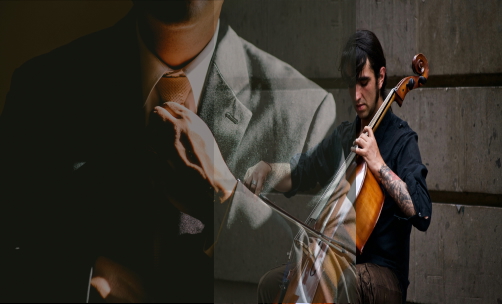
When you’re pioneering something that doesn’t quite exist yet, how do you make it visible? After 20+ years in C-level roles, I faced an unusual branding challenge: visually representing the intersection of classical music training and executive leadership.
The breakthrough came when I embraced the bridge metaphor—Management on one side, Art on the other. Every design decision had to speak “executive” while honouring the artistic foundation.
Building something new requires making the invisible visible—whether you’re developing disruptive strategy or pioneering new market categories.

Welcome to Academia: Where Research Meets Real-World Leadership

After more than 20 years leading digital transformation at companies like XING, Nokia, and DERTOUR Group, I’ve made an unusual career pivot. This October, I’m embarking on an Executive PhD journey at Antwerp Management School, investigating how cognitive processes developed through classical music training transfer to strategic decision-making in complex business environments. This category documents the intersection of rigorous academic research with practical leadership experience, offering insights from someone who has actually navigated boardrooms and digital transformations while applying artistic cognitive frameworks to real strategic challenges.

No More Masks in Business

I’ve made a radical decision: no more masks in business.

The corporate world taught me to suppress feelings, harmonize instead of speaking truth, and prioritize data over intuition. But this false professionalism costs companies millions in missed opportunities and demotivated teams.

My breakthrough came through coaching and my lifelong passion for classical music. Like a conductor sensing the finest nuances in an orchestra, sensitive leaders feel the harmonies and dissonances in their teams. This artistic sensitivity isn’t weakness—it’s a competitive advantage.

Authenticity means trusting your feelings as precise sensors, bringing uncomfortable truths to the table, and giving emotions the space they deserve in decision-making. It’s the foundation for my consultancy “Leadership Artist” and my upcoming doctoral research.

I’m done pretending. Authenticity is my new superpower, and it will transform how I lead forever.

When Academia Called: How Executive Leadership Experience Sparked Research-Backed Leadership Development Interest

When academics called my research proposal “intriguing,” I knew I’d struck something significant. My PhD application explores how cognitive skills from musical performance transfer to strategic leadership in digital environments—bridging a gap between artistic training and executive function that academia has barely touched. Starting October 2025 at Antwerp Management School, this research won’t stay theoretical…

Research-Backed Leadership Development: The Overlooked Cognitive Dimension I’m Built to Explore

After two decades in management teams at XING, Nokia, and DERTOUR Group, I’ve seen leadership frameworks come and go—each promising transformation, few addressing what actually determines strategic performance in modern organisations.

Leadership development suffers from a structural blind spot: it focuses on behaviours and tools, while the real differentiator lies in how leaders process complexity.

This gap exists because neither academia nor consultancy systematically investigates the cognitive capabilities that enable exceptional strategic thinking—pattern recognition, temporal anticipation, interpretative discipline.

What if these capabilities could be trained through formal artistic methods? Not as metaphor, but as structured cognitive development?

This is the question at the heart of The Leadership Artist: exploring whether conservatory-level musical training can measurably enhance strategic leadership effectiveness. My PhD research, begun in October 2025 at Antwerp Management School, aims to establish the empirical foundation.

Evidence-Based Leadership: Why Only a Former Executive Can Solve Executive Problems

When Peer Credibility Transforms Executive Consulting
Most consultants advising C-level executives have never occupied those chairs themselves. They’ve studied leadership but haven’t lived the weight of decisions affecting thousands of employees and millions in revenue.
After 20 years in C-Level roles at XING, Nokia, DERTOUR Group, and others, I transitioned into research-backed consultancy. That sequence matters profoundly. Executives need more than frameworks and case studies—they need advisors who’ve navigated comparable complexity, recognize unspoken pressures, and permit the honest conversations that transform strategic decision-making.
For challenges that truly matter, peer credibility changes everything.